Mrs. Wang's AI Adventure
Mrs. Wang has recently become obsessed with Doubao.
In the past, whenever something came up, her first instinct was to ask family, ask friends, ask neighbors, or dig through WeChat group chat history. Not anymore. She has found herself a new “life advisor.”
“I already asked Doubao.”
That sentence has gradually become her standard opening line whenever she needs to handle something.

Recently, Mrs. Wang needed to go to Shanghai to take care of some business. The matter itself wasn’t complicated, but since it involved handling things in another city — confirming specific locations, submitting documents, and finding the right service window — it was no small feat for an elderly person.
Where do I go? How do I get there? Where do I submit the paperwork? Is this the right address?
All these questions she naturally handed over to Doubao.
Doubao was happy to oblige. It answered quickly, with a steady and confident tone, and the response looked thorough. Mrs. Wang felt reassured — if the AI said so, it must be right.
Then she did something wonderfully earnest: she pulled out a pen and paper, and copied down everything Doubao had told her, point by point.
Item one: the address. Item two: directions. Item three: documents to bring. Item four: things to watch out for. Item five: possibly confirm in advance.
Written out neatly, line by line.
The whole scene looked less like someone chatting with an AI and more like someone drafting an official action plan. Doubao handled the output on the screen; Mrs. Wang handled the transcription at the table. The atmosphere was entirely serious.
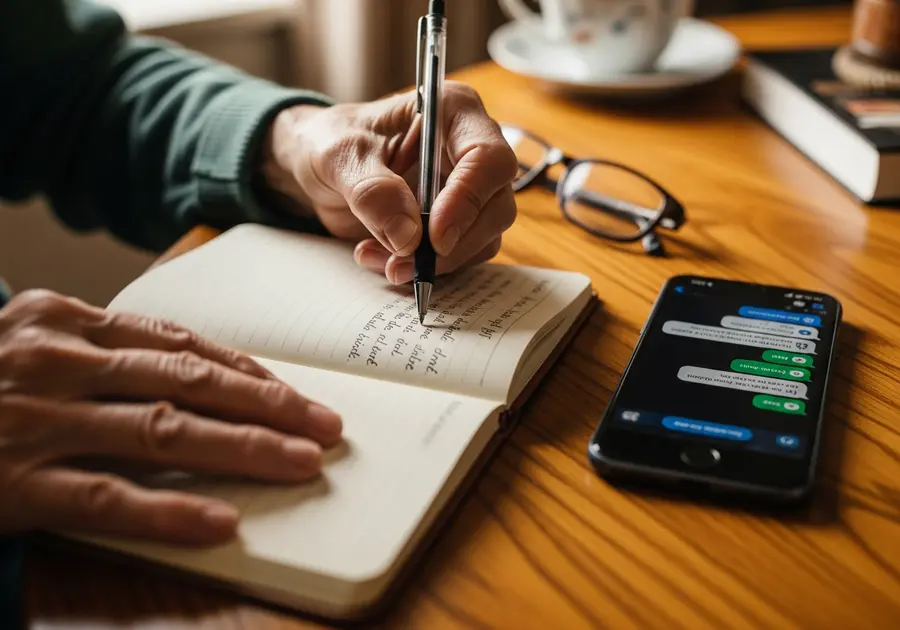
The problem was, all that diligence said nothing about whether the answers were actually correct.
Round One: Doubao Gave an Address That Used to Be Right
Before she left, I glanced at the address Mrs. Wang had written down and something felt off.
After checking more carefully, I confirmed that Doubao had given her an outdated address.
It wasn’t a made-up address, nor one that had never existed. About a year ago, that location had indeed been the right place to go. The problem was, the office had since moved — it was now two or three kilometers away at a different site.
That’s what made it so deceptive.
If Doubao had invented a completely fictional address, it would have been easier to catch. The tricky part was that it gave an address that used to be correct — it sounded reasonable, left traces you could find online, and you could even understand why the AI said what it said. But it was out of date.
This is exactly where AI tends to go wrong in everyday life: it doesn’t have to be wildly wrong. It might just be one step behind. And in the real world, one step behind is enough to cause serious trouble.
Two or three kilometers might mean nothing to a young person. But for an elderly woman carrying documents, racing against time, trying to find an unfamiliar place in an unfamiliar city — any single thing going wrong could unravel the entire day’s plan.
Fortunately, we caught it before she left. I quickly helped her verify the correct address and told her not to go to the location Doubao had mentioned.
But Mrs. Wang’s reaction was telling.
Her first response wasn’t “Oh, so Doubao was wrong.”
It was more like: “But Doubao said so.”
In her mind, Doubao wasn’t “a tool that might make mistakes” — it was more like “someone who really knows their stuff.” And because Doubao had been so thorough, and she had copied it all down point by point, having it there in black and white on paper somehow elevated its credibility even further. As if once it was written in the notebook, it had been upgraded from “AI’s answer” to “official guide.”
The first little incident passed without real harm. Just a near-miss.
Round Two: Documents Submitted, Wrong Location Again
She did eventually go to Shanghai and submitted her documents based on the information she’d gathered. She figured things were mostly handled.
About a week later, when staff reviewed her submission, they discovered she had submitted her documents at the wrong location — this particular matter should have been handled at a different service center in a different district.
So she had to rush back to Shanghai by train to redo everything.
First time: an outdated address, nearly went to the wrong place. Second time: wrong jurisdiction entirely, only discovered after the documents had already been submitted.
For a young person, this might count as a minor procedural mix-up. For an elderly person, it’s genuinely exhausting — rebooking tickets, heading out again, finding the new location, queuing again, explaining the situation again.
One out-of-town errand, thanks to incorrect information from AI, turned into two separate trips.
And to be clear, Mrs. Wang had been extremely prepared: she noted everything Doubao said; she read every reminder Doubao gave her; she followed every step Doubao laid out.
The problem was that Doubao had laid out a path that looked perfectly clear but was pointing slightly in the wrong direction.
It’s a bit like walking with a map that’s beautifully drawn, with routes clearly marked, and you follow it faithfully — only to discover at the end that it was an old edition.
Was she careless? Not at all. If anything, she was too careful. Careful enough to execute an incorrect answer with perfect precision.
The Most Interesting Part: She Still Trusts Doubao
If the story ended there, it would just be a small tale about an AI getting an address wrong.
But what’s really interesting is this: after two mishaps, Mrs. Wang didn’t lose faith in Doubao. She kept right on asking it things. When family members explained something, she might not fully go along with it. When we reminded her of something, she’d still mull it over. But when Doubao said something, she found it convincing.
You can’t entirely fault her for that. For elderly users, AI really does offer a remarkably good experience.
It never gets tired of your questions, never gets impatient when you ask the same thing twice, and never says “how do you still not understand this?” Ask once, it answers. Rephrase the question, it reorganizes its response and answers again. And crucially, it’s comprehensive — address, directions, materials, reminders, all listed out clearly, with a steady tone and logical structure. It genuinely resembles a patient, knowledgeable person.
That’s deeply appealing to older adults.
For many elderly people, the scariest part of handling official business isn’t the distance — it’s unclear information. They worry about bothering staff at service windows, or being misunderstood on the phone, or getting lost in a confusing website. Now suddenly there’s an AI that’s always available, always patient, and always capable of explaining things clearly and completely.
Of course she’s going to trust it.
The Problem Isn’t That She Was Careless — It’s That She Was Too Careful
The most vivid image from this whole episode is that little notebook.
Mrs. Wang copied down everything Doubao gave her — address, directions, documents needed, notes to keep in mind — one item at a time, in neat handwriting. She treated it with the gravity of someone organizing an official action plan, not recording a chatbot’s response.
And that’s precisely where the problem lay: she carefully organized Doubao’s answers, but never first verified whether those answers were current or applicable to her specific situation.
The funny thing about this story isn’t that Mrs. Wang was sloppy — it’s the opposite. She was too meticulous. Meticulous enough to transcribe an unverified AI response into a small notebook and call it her action plan. Meticulous enough to execute a slightly misdirected plan with flawless discipline.
This made me suddenly understand something about why scammers so often target elderly people.
Many older adults aren’t lazy or lacking in judgment — they’re actually very diligent, very cooperative, very willing to follow steps. As long as someone explains things patiently and completely, and seems to be genuinely helping them, they’re inclined to think: “They explained it so carefully, they must know what they’re talking about.”
Scammers deliberately exploit that trust. AI is obviously not a scammer and has no malicious intent. But from an elderly person’s experiential standpoint, the trust mechanism it triggers has some similarities: patient, thorough, reassuring, seemingly helpful. The difference is that scammers deliberately lead people into traps; AI can lead someone earnestly off course while itself not fully grasping the situation.
So we end up with a scene that’s almost absurdist:
Mrs. Wang wasn’t deceived and then unknowingly helped tally the proceeds — she was led astray by AI and dutifully took meeting minutes in her notebook.
You want to laugh, but once you stop laughing, there’s a little chill.
The Point Isn’t to Stop Using AI — It’s to Use It Well
What I want to say at the end of this story isn’t “elderly people shouldn’t use AI.”
Quite the opposite: elderly people especially need to learn how to use AI. Just like learning WeChat, QR code payments, and mobile banking back in the day, AI is likely to become another new baseline life skill. Elderly people who can’t use AI will only find life increasingly difficult in the future.
AI can help elderly users make sense of complex information, organize the steps for official errands, and explain baffling notices, web pages, and text messages in plain language. It can also give older adults a little more confidence and independence in handling things themselves.
But there’s one thing we need to teach them: AI is an assistant, not a judge. AI can organize information, but it cannot verify facts on your behalf.
Especially for things like addresses, phone numbers, service locations, document requirements, medical matters, financial questions, and legal issues — you can’t just hear it and act on it directly.
The simplest approach isn’t to immediately master a whole toolkit of fact-checking techniques. It’s just to ask AI one more question:
“How do you know this?” “Is this information current?” “Is there an official source for this?” “Does this apply to my specific situation?”
This is actually how we naturally evaluate information in everyday conversation. When someone tells you something important, you ask: “Where did you hear that? Are you sure?”
Ask AI the same thing. The more confidently it states something, the more you should ask: “What’s your basis for that?”
Sometimes, just that one question makes all the difference:
- If AI can’t clearly state a source and just offers a vague explanation, treat the answer as a reference only.
- If the information is old, vague, or has no time reference attached, be careful.
- If AI itself starts saying “please verify with official sources,” that’s basically a signal that you shouldn’t follow the answer directly.
This is using AI to check AI. Sometimes the best magic is using magic against itself.
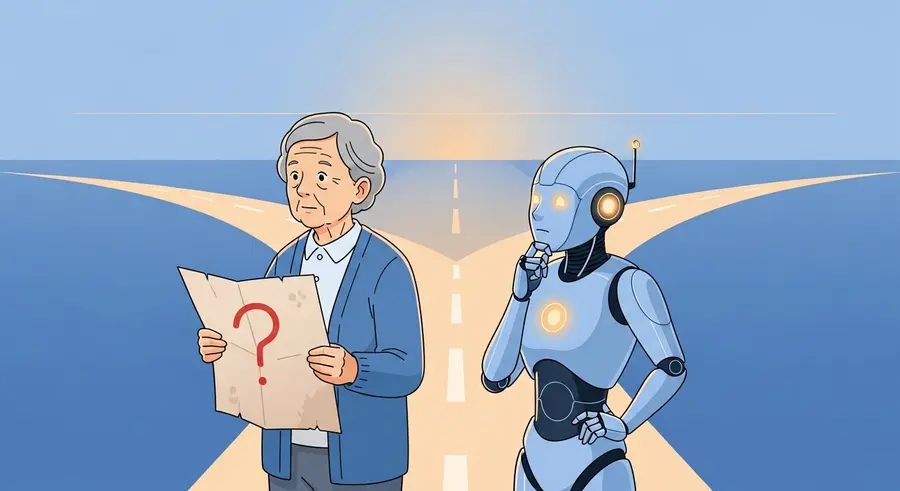
A User Manual for Mrs. Wangs Everywhere
To sum up this experience in a few words:
You can ask Doubao. You can write it in a notebook. But before you head out the door, ask one more thing —
“Doubao, how do you know this?”
Asking AI is step one. Following up on AI is step two. Then decide whether to act on it.
If AI gives you an address, ask for the source and when it was last updated. If it gives you a phone number, ask if it’s the official one. If it tells you where to go, ask whether that applies to your specific case. And if it sounds especially certain — don’t immediately take it at face value.
This isn’t about distrusting AI. This is about using AI well.
For a young person, an AI mistake might just mean a few extra clicks. For an elderly person, an AI mistake might mean an extra train ride.
Mrs. Wang’s AI adventure sounds pretty funny in the retelling. But it reminds us of something genuinely important:
The question for the future isn’t whether elderly people should use AI — it’s whether we’re going to take seriously the job of teaching them how. Just like we once taught them mobile payments, it’s time to teach them AI.
And the first lesson in using AI well may not be how to ask questions.
It may be how to ask follow-up ones:
“How do you know this?”